Iran conflict impacting Arkansas farmers
Published 1:29 pm Wednesday, September 30, 2026
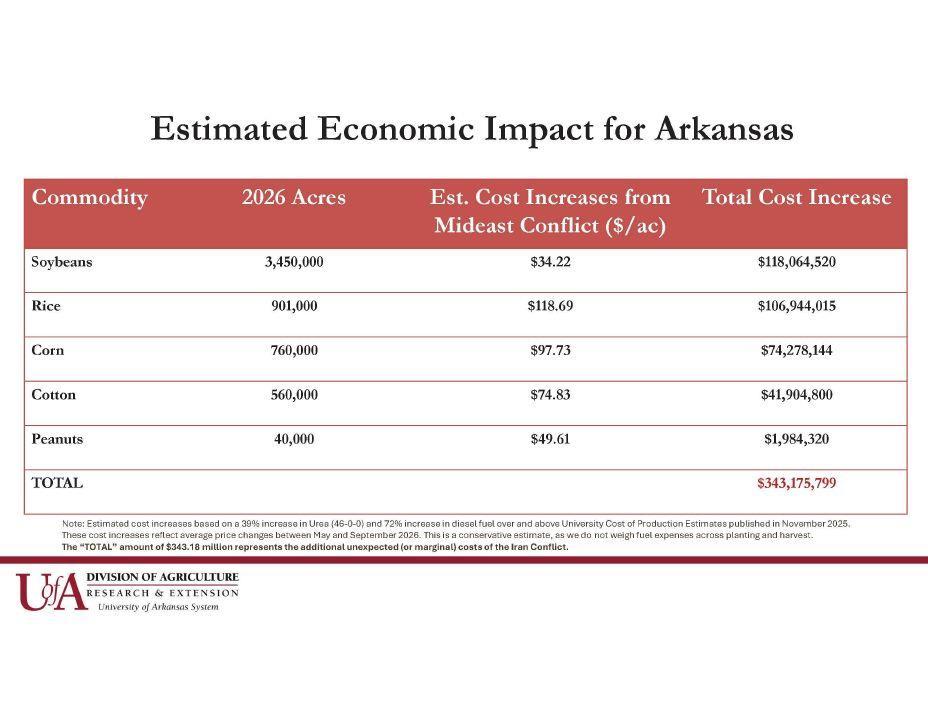
The University of Arkansas Department of Agricultural Economics and Agribusiness released data on how rising diesel and urea fertilizer prices are affecting Arkansas row crops. The unsurprising bottom line: it’s significantly raising farm production costs. The effects of the latest Middle Eastern conflict aren’t just hitting wallets at the gas station. They’re likely to affect consumers in-store.
The numbers
The data show that fuel prices are significantly affecting per-acre costs. November 2025 predictions for this year assumed a projected diesel price of $2.46 per gallon. The actual average between March and September of this year has been $4.22 for off-road diesel. Soybean costs are up $34.22 an acre. Cotton costs an additional $37.44 an acre to grow. Corn costs $40.33 more, and peanut growers have seen an average increase of $49.61. The biggest increase is in rice production, with a per-acre increase of $74.94.
That’s just fuel increases. An average 39% increase in urea fertilizer has caused per-acre costs for cotton, rice, and corn to rise by $37 to $57 above predicted levels.
A combined increase in fuel and fertilizer has raised the anticipated per-acre cost for the five commodities by $34.22 to $118.69.
Soybeans are the least-impacted commodity because they require far less fertilizer, as they can fix their own nitrogen. With lower input costs and better margins, Arkansas soybean production increased by 860,000 acres year over year. Rice acreage has decreased by 383,000 and corn has decreased by 50,000.
While increased diesel prices have no doubt affected the Arkansas meat producers, there may be a silver lining. Increased soybean production may lower soybean meal feed costs. According to a 2021 U of A report titled “Are chickens vegetarian?”, a significant portion of a broiler chicken’s diet consists of soybean meal. Perhaps the increased soybean production will lower feed costs for those producers.
The data show that increases in diesel and urea prices have resulted in an unexpected total cost increase of over $340 million. The Extension Office has called this a conservative estimate because expenses are not weighted to the planting and harvesting periods of high fuel use.